Showing posts with label Plot/Structure. Show all posts

Wednesday, April 17, 2019

How to Create an External Plot Journey by Developing the Internal Plot Journey

Plotting has always been the most difficult aspect of storytelling for me to master. I used to wonder, how can I create a plot that is not only interesting, but that can somehow connect with the main character's inner struggles and desires as well? 


Pin This!

Since this was a problem area for me, I spent extra time studying how I can create an external arc of my story by drawing from the internal arc of my character. In this new episode of Firsts in Fiction podcast, I share some of the secrets I learned and discuss how you, too, can weave together external and internal conflict to thrust your story into motion. Check out the discussion below!


Main points:

  • Character-driven novelists, in particular, can benefit from discovering their story's plot by first establishing their character's inner journey. Once we discover who they are, then we can map out their external journey. 
  • The external journey will cause problems and tension as the inner journey proceeds. 
  • The overarching external goal of your main character, motivation, and story stakes can all be uncovered by first discovering your main character's inner need. 
  • The external and internal journey that your main character undergoes needs to be woven together in order to deliver a well-rounded story.


How do you create the external plot of your stories? What are other ways that we can brainstorm plot ideas by first uncovering the inner arcs of our main characters? Let me know in the comments!


Tweetable:


Wednesday, June 13, 2018

Drive a Story Forward by Following These 5 Steps

Pin This!


I wrote the first version of my debut novel, PURPLE MOON, when I was fifteen years old—and at the time, I wrote the story for fun. For my eyes only. Because of that, I didn’t have much of a plan in place for the plot. When the story was complete, I had a best-selling author review the manuscript—and although she complimented my writing, she told me the plot was lacking. My main character needed a goal.


It was the first time I’d heard of such a thing. Why did Selena need a goal?


Tweetable:


Drive a Story Forward by Following These 5 Steps https://bit.ly/2JFfo0o #writingtips #amwriting @TessaEmilyHall


Thursday, March 12, 2015

The Art of Storytelling P.3: The Basics of Plotting

Pin This!


I have always been enthralled by a good story. 

Growing up, I was drawn towards the books that struck an emotional chord while delivering an inspirational message, such as Number the Stars by Lois Lowry, Because of Winn Dixie by Kate DiCamillo, Old Yeller by Fred Gripson, and Because of Anya by Margaret Haddix. I fell in love with the films that others considered to be too heartbreaking or too sappy, such as Martian Child, My Girl, August Rush, A Walk to Remember.

So when I ventured into writing Purple Moon in the 9th grade, I knew I wanted it to be more than just an entertaining story. 

I wanted to craft the kind of story that would move readers to tears, one that they would find themselves connecting with, one that could shed light on issues they might be facing. 

But since I was so focused on the inner journey of Selena (my protagonist), I neglected to give a necessary amount of attention to the plot. 

So after writing the first draft, I was told by an award-winning novelist that my plot needed a bit of work.  

I highly appreciated her feedback, of course--yet at the same time, I was also thinking: How can I rewrite Purple Moon in a way that will take the reader on an unforgettable journey, yet without sacrificing its emotional and inner layer?

Since then, I have spent much time into studying how to plot a book by reading writing craft books, analyzing the plot of other fiction novels, and soaking in the pacing of stories as they unfold through a film. 

And since the outer journey of the protagonist doesn't come as naturally to me as the inner journey, I now go into each book with a few basic plotting guidelines in mind:

    1. Every protagonist needs a goal. 

This is one guideline that the award-winning author had given me in her feedback. At first, I was confused by this. What kind of goal? Why does she need one? 

I soon realized that, without a goal, a story can quickly turn passive. This means that the events in your book are happening to your protagonist rather than moving the story along. 

To prevent this from happening, give your main character something to fight for, something that she must struggle towards. Without this, your book may come across as dull and will become far too easy for a reader to put down. 


    2. Every story needs an antagonist, one that will prevent the protagonist from achieving his/her goal. 

I used to think that the antagonist, or the villain, was simply the "bad guy" in a story. But what makes this person so bad? Why is the protagonist, and hopefully the readers as well, unhappy with this villain? 

The reason is because the antagonist's job is to keep the protagonist from achieving his/her goal. They throw obstacle after obstacle towards the main character, and the main character struggles throughout the entire novel to get past these roadblocks. 

Keep in mind, however, that the antagonist does not have to be a person. Rather, the opposition can come in the form of society, nature, or even the protagonist himself.

    3. Every story needs a beginning, a middle, and an end. 

This is where the 3-Act structure comes in. I've discovered that, when I neglect to write a book
without any kind of structure, the pacing of the story becomes quickly off track. It either takes too long to get "into" the story, or the ending is dragged out for far too long. 

Is it necessary to write every book with this kind of structure? Yes, if you're hoping to tell a compelling story. Why? 

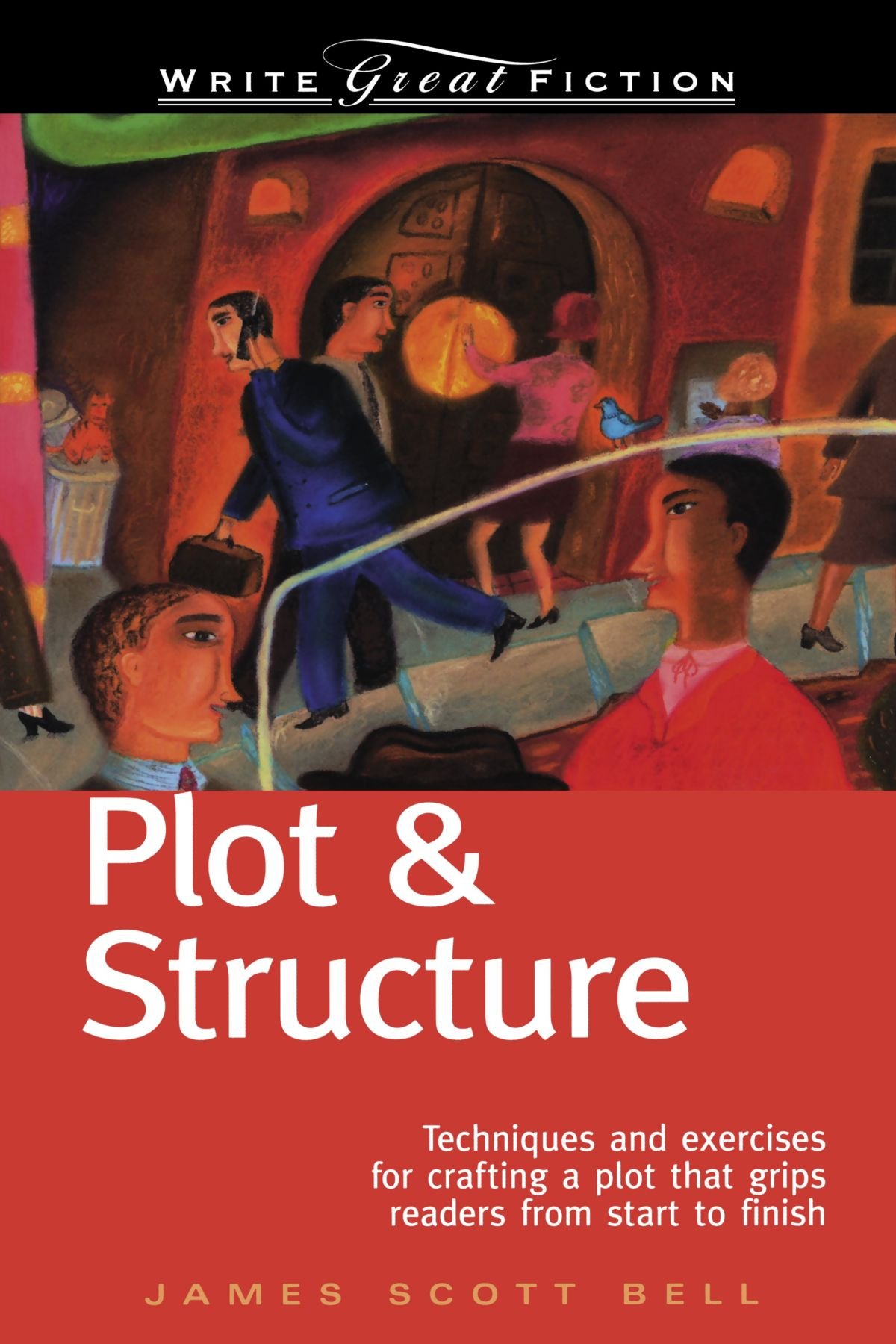
I love the way James Scott Bell puts it in his book, Plot & Structure:

"Why does the three-act structure work? Probably because it is in line with how we live our lives. A three-step rhythm is inherent in much that we do ... Childhood is relatively short and introduces us to life. That long section in the middle is where we spend most of our time. Then we have a last act that wraps everything up." 

As I mentioned in Part 1 of this series, writing with a structure does not mean that you have to neglect telling the story of your heart. 

In fact, it's the opposite: Because when you learn how to plot your book effectively, then you will be able to tell the story on your heart in a way that resonates with your readers and keeps them flipping through the pages. 

Next week we're going to delve even further into the 3-act structure and discuss how you can write your book in alignment with that all-too-handy plot mountain diagram. =) 

If you haven't yet, be sure to catch up on the beginning of this series:

! Which one comes more naturally for you: Crafting your protagonist's inner journey or plotting their outer journey?

post signature

Thursday, February 12, 2015

The Art of Storytelling P.1: Discover the Story of Your Heart

First of all, I want to thank everyone for having patience with me recently. I've been pretty quiet on the blogosphere: However! Good things are coming from it. I'm on a roll writing my third book, and although I have several posts that I've started but have yet to finish, I am going to get back to posting at least once a week.

{View this pic on Instagram}
(Oh, and guess what? Several people have complained that my mailing list isn't working, so I finally was able to fix it! You can now enter your email on the sidebar and have my posts sent directly to your inbox.)

In other news, I had tons of fun this past Saturday teaching a writing workshop for teens with YA author, Caroline George. We shared our publishing experiences, taught on the art of storytelling, played games, held a contest, participated in a book exchange, and signed books. (And maybe had a little too much chocolate and coffee ... if that's even possible! ;) )

{View this pic on Instagram}

We are planning to hold more creative writing workshops though, so if you live in NC, GA, or SC, send us an email here. Give us the name of your school (or homeschool group), and we will try our best to arrange a visit. =)   

{View this pic on Instagram}


But since most of you probably don't live on the southeast, I'd like to share a condensed version of what we discussed in the workshop.  

It's going to be divided into three parts. Today we will talk about what it means to master the art of storytelling, the 3 ingredients that every story needs, and how you can discover the story of your heart.


à What is the art of storytelling?
  • The art of storytelling is mastered when a writer writes the story of their heart and presents it in the basic story-telling format.
  • It is achieved when they write the story they are passionate about in a structure that works.
  • It is a combination of both passion and structure.

Many writers believe that writing is not an art if it is written based on a structure, or a "formula". However, that is just the opposite; the art of storytelling is mastered when we can combine both the right-side and the left-side of our brain to create a story that resonates with our readers.

If your novel lacks structure, then you risk losing the attention span of your reader (as well as an agent or publisher). Sure, your writing may be beautiful; however, writing a book is not just about your ability to string pretty words together.  

photo credit: Amazement awaits us at every corner.  James Broughton via photopin (license)


The first step in writing a story that mixes both art and structure is by first discovering the story of your heart.

You can do this by asking yourself the following questions:
  1. What are 3 things you're passionate about? (This can include certain topics you're interested in, hobbies, or even locations.)
  2. What are 3 things you're familiar with? (This can also include topics, hobbies, locations, etc.)
  3. What are 3 of your favorite books?
  4. Now, take a look at your 3 favorite books. Ask yourself: What do these stories have in common? (For example: Do they include a romance? Are they comedic? Take place on a beach? About zombie?)

Once you begin with the foundation of your story first, then you will realize that writing a book isn’t that difficult, as long as it is taken step by step.

In fact, writing a book and baking cookies have a lot in common. Although there are a variety of different types of cookies, they each begin with the same three basic ingredients: Eggs, milk, and flour.

photo credit: free food via photopin (license)

Similarly, each book begins with 3 basic ingredients as well: Plot, character, and setting. So after you figure out what the story of your heart is, it's time to uncover the 3 elements that is going to turn these ideas, your passions, into a story. 

However, keep in mind that when you write a book, structure should not be ignored.

Think of it this way: When you bake cookies, you can't just throw those 3 ingredients together and hope that, somehow, cookies will magically appear.

Instead, you have to follow a certain formula in order for them to actually be edible. The same applies to our writing as well.

In the following weeks, we will discuss how to develop each of these 3 elements: Your protagonist, setting, as well as the plot.

! Challenge: In the comments, combine 3 "ingredients" from a book or movie to create a new story idea. Be sure to respond to the other comments as well!

post signature

Wednesday, March 19, 2014

Preparing to Write Part 3: How to Create a Plot Guideline & Outline + Giveaway!

The past two weeks, I shared tips on how to brainstorm and "plan" your story. (Yes, planning is different than plotting!) This week, I will be discussing how to plot and outline your story. 

Pin It!

To be honest, this is probably the most difficult step in preparing to write--at least for me it is. Although I don't plan every single scene of my book before begin writing, I do like to have a general guideline to follow. And even if you are a panster, I recommend that you do the same. 

➙ Creating a Plot Guideline

I have found that, when I take the time to create a plot guideline before writing my first draft, I end up saving myself a lot of stress (and writer's blocks!). 

First, your protagonist must have a desire. Your readers don't want to read about your protagonist's uninteresting day-to-day life. They need something to root for. And the conflict that you weave into your novel should be stemmed from your protagonist's desire.
 
I'll be honest with you: I used to skip over this part. My "story starter" never began with a goal--and because of that, I completely forgot to establish a goal within those first three chapters.

This is what I did in the first draft of Purple Moon, and it resulted in a character-driven novel that lacked a well-developed plot. (I had two professionals in the industry tell me that my plot was underdeveloped.) 

So what did I do? I went back to the very beginning and gave my protagonist an obvious desire. I then had to weave in plot threads that stemmed from Selena trying to reach her goal, but never quite making it. 

This is why it is crucial that you establish this before you begin to write.

In Brandilyn Collin's book Getting Into Character, she gives a great general plot guideline to create while preparing to write:       
1) Begin with a desire.
2) Weave in four obstacles that will prevent your protagonist from reaching this desire.
3) Then, create a denial, which is when the character realizes that reaching their desire is impossible. 
4) If natural to the flow of your story, create a devastation. This is usually when your protagonist has hit rock bottom and is even worse off than they were to begin with.
5) End with your protagonist either reaching their goal in a different way than they had hoped, or realizing that it wasn't what they wanted after all.
"[Desires] set the course for conflict, dialogue, and choices within a scene."  ~Brandilyn Collins
➙ Creating an Outline

Once you have created your plot guideline, you can then create an outline for your novel. This can be as brief or as detailed as you'd like.

I prefer to create a "broad" outline, which contains the major events of the story. I do this in the form of a timeline so I can keep track of when each scene takes place.

To begin, I write down Ch. 1 through Ch. 30 on a document. Although none of my books end up finishing with 30 chapters, I like to plan it this way at the beginning so I can have the same general story structure for all of my novels. This helps to plot and gives me an idea as to when certain events should take place. (It isn't until the last couple of drafts that I arrange my chapters so it is more natural to the flow of the story.)

How I outline: (For the big-picture outliners)

CHAPTER ONE

Fri, March 21: Sally hangs out with her best friends at the park
Sat, March 22: Sally finds out that her family is moving to another state in only one week

CHAPTER TWO

Sat, March 22: Sally breaks the news to her best friend
Sun, March 23: 
Mon, March 24: Sally's final week at her school. Has an argument with her mom at home about the move. 

CHAPTER THREE

Tues, March 25: Sally packs for the move
Wed, March 26: 
Thurs, March 27: 
Fri, March 28: Sally's friends throw her a surprise goodbye party
Sat, March 29: Her family's moving day. Sally then finds out the truth behind why they're having to move so quickly--and when she finds out, she refuses to leave.

(Don't worry, this outline is a demonstration only. =) )

As you can see, I left a lot of room for developing the story's details (pansting) as I write. The dates that do not have a scene should be written anyway (as shown above) so you do not confuse yourself. (It is also a good idea to leave the dates in case you want to add or rearrange your scenes.)

Also, I recommend you find a calendar that corresponds with your dates. This will especially come in handy if you ever get confused and for some reason lose track of the dates (which I have done a few times). For example--since the above timeline fits this year's calendar, I would Google "March 2014 calendar" and save the image I find (below). 


Is it necessary to know the dates? Definitely. Otherwise, you might get in trouble later on. Also, if your story contains certain holidays, you will need to plan ahead so that it falls on the correct date. Creating a timeline not only prevents confusion, but it serves as a great visual guideline as well.

Again, this outline is recommend for those who want to plan the "big picture" of the novel rather than the details. This method gives you plenty of freedom to rearrange the outline as you write your story.

Other ways to outline: (For the detailed outliners)

If you prefer to outline every detail before writing, I recommend the Microsoft Word outline feature. I tried this for a while and found it very helpful. (However, if you use this method, I recommend keeping another document for the timeline of your novel.) Click here for instructions on how to use this feature. 
You could also use apps, such as:

No, not every writer needs to outline. However, if you are a panster, you should at least create a plot guideline so your story's focus will remain clear, and to prevent losing your way as you write.


     ✎ Are you a big-picture or detailed outliner? How do you create your outlines? 


♡ ♡ ♡

Giveaway!

One person will win a free two-week writing mentoring course through my Write Now program! 

The winner will:
  • Receive critiques on their writing
  • Receive lessons especially designed to fit their writing needs
  • Have the opportunity to receive feedback on their current novel
  • Set reasonable goals for their writing
  • And more!
(Recommended for ages 13 - 25) 

Interested? Enter below! =)

a Rafflecopter giveaway
photo credit: Rennett Stowe via photopin cc
post signature