Showing posts with label Character-Driven/Plot-Driven. Show all posts

Wednesday, April 17, 2019

How to Create an External Plot Journey by Developing the Internal Plot Journey

Plotting has always been the most difficult aspect of storytelling for me to master. I used to wonder, how can I create a plot that is not only interesting, but that can somehow connect with the main character's inner struggles and desires as well? 


Pin This!

Since this was a problem area for me, I spent extra time studying how I can create an external arc of my story by drawing from the internal arc of my character. In this new episode of Firsts in Fiction podcast, I share some of the secrets I learned and discuss how you, too, can weave together external and internal conflict to thrust your story into motion. Check out the discussion below!


Main points:

  • Character-driven novelists, in particular, can benefit from discovering their story's plot by first establishing their character's inner journey. Once we discover who they are, then we can map out their external journey. 
  • The external journey will cause problems and tension as the inner journey proceeds. 
  • The overarching external goal of your main character, motivation, and story stakes can all be uncovered by first discovering your main character's inner need. 
  • The external and internal journey that your main character undergoes needs to be woven together in order to deliver a well-rounded story.


How do you create the external plot of your stories? What are other ways that we can brainstorm plot ideas by first uncovering the inner arcs of our main characters? Let me know in the comments!


Tweetable:


Wednesday, March 20, 2019

Develop Your Story by Beginning with Character Backstory

As a character-driven novelist, I find it thrilling to discover my characters before I write their stories. I can get to know their hearts and their histories before I allow them to walk onto the page. Doing this not only enables me to present well-rounded characters to my readers, but it also helps me to develop the entire course of the story as well.


Pin This!


Think about it: In real life, our past determines our present. The choices we made yesterday have brought us to where we are today. So how can we, as authors, expect to authentically slip into the shoes of our characters if we aren't first aware of why they are the way they are today? How can we expect to write in deep POV if we don't first allow ourselves to delve into our character's history? 


This is why, when I approach a new book, I like to first begin with backstory. Not only does this allow me to present flesh-and-blood characters to my readers, but it also helps me steer the entire course of our story.


In my first episode of The Firsts in Fiction Podcasts (an absolute favorite writing-craft podcast of mine, which I have recently joined as co-host--yay!), we've shared tips on how you, too, can develop your story by first beginning with backstory. Check out the video below! 


Main points:


  • When we discover the history, then we can craft well-rounded, authentic characters.
  • Our character's past influences his/her worldview, attitude, religion, personality, etc. Characters are who they are because of the decisions they made yesterday--just like all humans. 
  • It's important for writers to understand the backstory between character relationships as well--relationships with humans, as well as with the story's setting(s). 
  • When we understand their yesterdays, then we can understand the "whys" of their today. This can then shape a character's internal struggles, goals, inner needs, and flaws, which can influence the external journey of the plot. Our characters' pasts might come into play as they walk through the course of the story.


What are your favorite ways to discover your characters' backstories? Do you brainstorm backstory first, or do you discover it as you write? Let me know in the comments! (And don't forget to give the video a thumbs up if you liked it!)


Tweetable: 


Wednesday, June 13, 2018

Drive a Story Forward by Following These 5 Steps

Pin This!


I wrote the first version of my debut novel, PURPLE MOON, when I was fifteen years old—and at the time, I wrote the story for fun. For my eyes only. Because of that, I didn’t have much of a plan in place for the plot. When the story was complete, I had a best-selling author review the manuscript—and although she complimented my writing, she told me the plot was lacking. My main character needed a goal.


It was the first time I’d heard of such a thing. Why did Selena need a goal?


Tweetable:


Drive a Story Forward by Following These 5 Steps https://bit.ly/2JFfo0o #writingtips #amwriting @TessaEmilyHall


Thursday, March 12, 2015

The Art of Storytelling P.3: The Basics of Plotting

Pin This!


I have always been enthralled by a good story. 

Growing up, I was drawn towards the books that struck an emotional chord while delivering an inspirational message, such as Number the Stars by Lois Lowry, Because of Winn Dixie by Kate DiCamillo, Old Yeller by Fred Gripson, and Because of Anya by Margaret Haddix. I fell in love with the films that others considered to be too heartbreaking or too sappy, such as Martian Child, My Girl, August Rush, A Walk to Remember.

So when I ventured into writing Purple Moon in the 9th grade, I knew I wanted it to be more than just an entertaining story. 

I wanted to craft the kind of story that would move readers to tears, one that they would find themselves connecting with, one that could shed light on issues they might be facing. 

But since I was so focused on the inner journey of Selena (my protagonist), I neglected to give a necessary amount of attention to the plot. 

So after writing the first draft, I was told by an award-winning novelist that my plot needed a bit of work.  

I highly appreciated her feedback, of course--yet at the same time, I was also thinking: How can I rewrite Purple Moon in a way that will take the reader on an unforgettable journey, yet without sacrificing its emotional and inner layer?

Since then, I have spent much time into studying how to plot a book by reading writing craft books, analyzing the plot of other fiction novels, and soaking in the pacing of stories as they unfold through a film. 

And since the outer journey of the protagonist doesn't come as naturally to me as the inner journey, I now go into each book with a few basic plotting guidelines in mind:

    1. Every protagonist needs a goal. 

This is one guideline that the award-winning author had given me in her feedback. At first, I was confused by this. What kind of goal? Why does she need one? 

I soon realized that, without a goal, a story can quickly turn passive. This means that the events in your book are happening to your protagonist rather than moving the story along. 

To prevent this from happening, give your main character something to fight for, something that she must struggle towards. Without this, your book may come across as dull and will become far too easy for a reader to put down. 


    2. Every story needs an antagonist, one that will prevent the protagonist from achieving his/her goal. 

I used to think that the antagonist, or the villain, was simply the "bad guy" in a story. But what makes this person so bad? Why is the protagonist, and hopefully the readers as well, unhappy with this villain? 

The reason is because the antagonist's job is to keep the protagonist from achieving his/her goal. They throw obstacle after obstacle towards the main character, and the main character struggles throughout the entire novel to get past these roadblocks. 

Keep in mind, however, that the antagonist does not have to be a person. Rather, the opposition can come in the form of society, nature, or even the protagonist himself.

    3. Every story needs a beginning, a middle, and an end. 

This is where the 3-Act structure comes in. I've discovered that, when I neglect to write a book
without any kind of structure, the pacing of the story becomes quickly off track. It either takes too long to get "into" the story, or the ending is dragged out for far too long. 

Is it necessary to write every book with this kind of structure? Yes, if you're hoping to tell a compelling story. Why? 

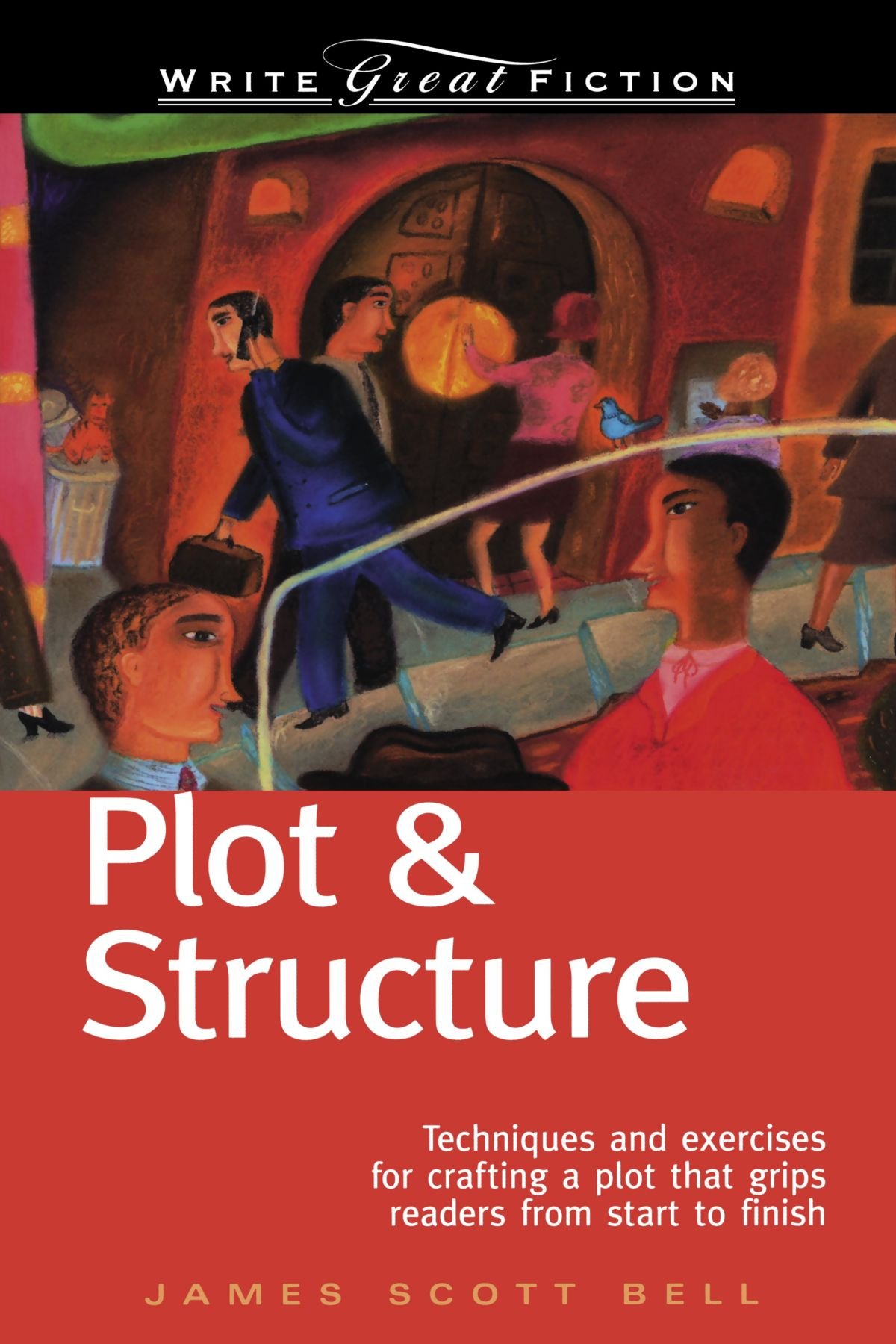
I love the way James Scott Bell puts it in his book, Plot & Structure:

"Why does the three-act structure work? Probably because it is in line with how we live our lives. A three-step rhythm is inherent in much that we do ... Childhood is relatively short and introduces us to life. That long section in the middle is where we spend most of our time. Then we have a last act that wraps everything up." 

As I mentioned in Part 1 of this series, writing with a structure does not mean that you have to neglect telling the story of your heart. 

In fact, it's the opposite: Because when you learn how to plot your book effectively, then you will be able to tell the story on your heart in a way that resonates with your readers and keeps them flipping through the pages. 

Next week we're going to delve even further into the 3-act structure and discuss how you can write your book in alignment with that all-too-handy plot mountain diagram. =) 

If you haven't yet, be sure to catch up on the beginning of this series:

! Which one comes more naturally for you: Crafting your protagonist's inner journey or plotting their outer journey?

post signature

Friday, February 20, 2015

The Art of Storytelling P. 2: Crafting Memorable & Likable Protagonists

Last week, we discussed the definition of the art of storytelling, as well as the three basic ingredients that build a story. Today we're going to discuss one of my favorite aspects of writing: Creating the protagonist. 

Pin this!


First, if you really want to learn how to craft an intriguing main character, here's what I would advise:

Write a list of your favorite main characters. Then ask yourself:
  1. What is it that I find intriguing about these characters?
  2. What are their strengths and weaknesses?
  3. How are they different from the protagonist of other books? What sets them apart?
  4. How can I relate to this character? And is that why I like them so much? 
  5. What qualities do they possess that make them likable? 
Every element of a book -- the setting, protagonist, and the plot -- plays a specific role in storytelling. 

But out of all of these components, the protagonist is probably the most important ingredient. 

If your book has a nice setting and a strong plot but an under-developed main character, then your reader won't care what happens to the protagonist. They won't be interested in following their journey.

So how can you craft your protagonist in a way that is compelling and draws your reader into the story?

I highly advise that you get to know your character before you set out to write their journey. Here are a few guidelines to keep in mind:

    1. Protagonists need to be likable (or at least sympathetic).

If your character is unlikeable, it's important that you at least give your reader a reason to feel sympathy towards them.


Saving Mr. Banks movie still
In the movie Saving Mr. Banks, the protagonist, P.L. Travers, could come across as unlikeable. However, since her backstory is woven throughout the film, the viewers understand that she is not an "evil person"; rather, there is a reason as to why she is the way she is. 

As her backstory progresses, the viewers begin to feel sympathy towards her. (Another thing to note is that, even though she might not be a friendly person, the screenwriters showed her personality in a way that came across as humorous rather than harsh.)  

Whether or not your protagonist is naturally likable or unlikable at the beginning, your readers should understand why they behave the way that they do and why they make certain choices. 

To craft a likable character, give them admirable traits, such as: humility, self-lessness, optimistic, etc.

However, keep in mind that your main character should not be perfect. They need flaws as well, which brings us to point #2:

    2. Protagonists need strengths and weaknesses.

Although your main character should be likable, they should not be perfect. Give them flaws. Show that they are human. Doing this will help enable your readers to relate to them, and it will help your character to come across as realistic.

However, be careful that your protagonist doesn't come across as weak either. Although they should definitely grow and become stronger by the end of the book, show a bit of this strength at the beginning.

For instance, here's one comment I received by a reviewer for my novel, Purple Moon (via Amazon):
Selena from my novel, Purple Moon

"I was immediately drawn to Selena and her plight, she was honest and easy to relate to. She wasn't perfect, she had her struggles and her flaws and it would have been easy to make her someone to pity, but she had a certain spark and strength that truly brought her to life."

When crafting your protagonist, keep in mind that when it comes to strengths and weaknesses, it's all about balance. You don't want them to come across as pitiful or weak, but you also don't want them to be perfect, either. 

    3. Protagonists should be relatable (to your readers as well as yourself).

Readers like to identify with the character they’re reading about. They want to feel a connection with them. To establish this connection, give them similar struggles and insecurities that your reader might be dealing with as well.

This is my favorite part about writing a book: Connecting personally with my main character, and finding ways for her to connect with my readers also. 


When I went into writing Purple Moon, I wanted to craft a protagonist that could easily identify with the majority of teens. 

To do this, I gave her several of my own struggles, insecurities, passions, etc. (Fortunately, that connection came across, because the one comment that I receive the most on Purple Moon is that Selena seems genuine and relatable.)  

I'm not saying that your protagonist should be an exact replica of yourself; however, it is possible to identify with your character, even if she is the complete opposite from you. 

Give her a similar personality. Or hobbies. Or style. Or family dynamics. Then, while you're writing, try to bring out this connection as much as you can. 

Not only will doing this cause your protagonist to come across as realistic and relatable, but it is also a very fun way to express yourself through your characters. =) 

    4. Protagonists need to be unique in their voice, interests/hobbies, dialect, as well as their style.

There are so many books on the shelves today. How in the world are we going to craft a protagonist that is unique, one that stands out in the crowd?

Well, think about it: There are no two humans alive today that are an exact replica of another.
photo credit: Frauen via photopin (license)
We all have different backstories. God has given each of us a certain appearance, personality, family dynamics, dreams, passions, hobbies. We each have a specific way that we speak, a unique way that we dress, certain behaviors and mannerisms, habits and quirks, etc. 


Filling out a character chart might help to organize the details of your protagonist, however it's not going to truly bring them to life. 

When you want to really get to know a person, do you read a fact sheet about them? Or would you rather have a conversation with them over coffee?

If you truly want to craft a unique protagonist, it's important to first get to know your character by sitting down and having coffee with them. Allow them to speak to you, to come to life in your own imagination first. 


photo credit: P1000156 via photopin (license)

Then, when you write, highlight on the specific details that sets your character apart and shows who they are. (Do they wear the same key necklace every day? Do they have a strange obsession with rocks? Do they only listen to 80s music?)

Doing this is the only way you will be able to craft a genuine, unique, and 3-dimensional character.

    5. Protagonists need a backstory.


photo credit: Katie T via photopin
 (license)
Every person that we meet has a story. 

Our history--the things we have struggled with, the decisions that we have made, the people we have met, the places we have seen--they all contribute to the person that we are today. 

There's a reason why that man is afraid of flying: Maybe his parents were killed in a plane crash when he was younger. There's a reason why that teenage girl won't wear a bathing suit: Maybe she was bullied for being "fat" as a kid. There's a reason why that college student is afraid of dating: Maybe she was in an abusive relationship as a teen.

Just like real life, it's hard to really understand why a person is the way that they are until you hear them speak about their past. 

So when you're crafting your protagonist, begin with their backstory. That way you will see how their past has shaped them into the person they are today.  

 à Conclusion:

Readers fall in love with characters. I don't remember every plot twist of Anne of Green Gables, but I do remember the red-headed, optimistic, and imaginative orphan girl who was in love with stories. 

One great way to create 3-dimensional characters is by "studying" the people around you (in a non-creepy way ... haha!). Why do you like the people that you like? What are their flaws? Insecurities? Habits? Are there any unique traits or quirks that they have? What are their mannerisms?

If you want to craft characters that stay with your readers long after they've read your book, I would recommend spending as long as you can developing a protagonist that comes to life, one that will be unique, memorable, likable, relatable, and realistic. 

It is only when you really get to know your protagonist(s) should you then begin to write their story. 


! Challenge: In the comments, discuss your favorite characters by answering the questions presented at the beginning of this post. Be sure to respond to other comments as well!


post signature

Friday, January 24, 2014

How to Capture (and Keep) Your Reader's Attention

Pin It!
When it comes to writing, crafting characters has always been my forte; developing the plot, on the other hand, is a different story (no pun intended). When I wrote the first draft of Purple Moon, I realized that it was lacking in plot development. This is yet another reason why I decided to postpone its release date: so I could strengthen the plot a bit more.

Now that I am writing the sequel to Purple Moon, I am experiencing same difficulties I did when I wrote the first book. It is especially difficult since this series is character-driven. This will be my third full-length YA novel I have written, and I have found that I always seem to get the most frustrated at this point: writing the first draft--when I want the book to grab the reader's attention, include the right plot threads, and keep readers flipping the pages to find out what happens next.

The simplest way to do this, I have found, is by studying the plots of other books (and movies).

When I read Divergent by Veronica Roth this past summer, I was captured--from start to finish. As I zipped through the story, I tried to take mental notes as to why I was so intrigued. I wanted to figure out the author's secrets, how she was able to capture my attention so well. Here are some of the techniques I have discovered:

     ➙ Grab the reader from the start. 

When I began reading Divergent, there was no way I could put the book down. The author incorporated conflict, as well as a life-changing decision that the protagonist was faced with, and I was eager to continue reading to find out what would happen. The protagonist's voice was also unique. This made me feel as though I were watching a movie rather than reading a book.

     ➙ Create likable characters that people can relate with. 

Tris, the protagonist in Divergent, is very likable. I am sure that many of us (especially teenagers) can see parts of ourselves in her. She does not consider herself to be brave. She wrestles with a life-altering decision (something every teenager has to deal with). Yet despite the fact that she considers herself to be average and weak, we discover that she is actually full of strength. These are the kind of characters that your readers will enjoy: heroic, strong, yet imperfect characters who face some of the same challenges that they do.

     ➙ Craft your plot so that readers are itching to find out what will happen. 

You can do this by ending your chapters with a cliff-hanger, incorporating much conflict, and having unanswered questions throughout the book--questions that can only be answered near the end of the story. The questions that ran through my mind as I read Divergent were: What choices will she make? Will she make it through the conflict that is constantly being thrown at her? Will she end up with the guy? Will she reach her goal?

     ➙ Include much conflict. 

There should always be something at stake for your protagonist. Brainstorm ways that would cause much trouble for your protagonist, and then make it worse. And even worse. That way, your reader will think it is impossible for your protagonist to make it out of the mess. One of my favorite ways to do this is through the ticking time bomb effect, which is especially useful in suspense novels.

     ➙ Create a chill-factor. 

This is a concept that I made up--as far as I know--and one that I hope to accomplish in all of my books. You know that feeling when you're reading a book and suddenly, near the end and/or cliff-hanger, the protagonist discovers something or accomplishes something that leaves you with goosebumps? These chill-factors are never just randomly thrown in. Instead, they are foreshadowed at the beginning, and throughout, the entire novel. (I would give an example of one, but I'd rather not give away any spoilers.) This is the moment when things begin to come together for the protagonist. This is the moment that might leave the reader in tears and have them closing your book satisfied and completely in awe of your story.

♡ ♡ ♡ 

Most importantly, write the novel that is in your heart. If you sit down to write with the sole purpose of creating a page-turning book, you might capture your readers' attention, but you won't capture their hearts. Don't be so determined to follow every single technique. Instead, allow the story to reveal itself, while keeping these techniques in mind as you write and/or outline.


     ✎ Are there any techniques that I failed to mention? Are you more of a plot-driven or character-driven novelist?

In case your wondering about Friday's Reflection: I have decided to only post it every other week. That way I can post more writing/faith-related posts. =) However, feel free to post it on your blog!

Also, there is a giveaway for PURPLE MOON that ends tonight! Click here to enter this giveaway on Goodreads. 
photo credit: susivinh via photopin cc

Thursday, March 7, 2013

Thursday's Thought: Do You Prefer Character-Driven or Plot-Driven Stories?

Every story should have a plot, and every protagonist should have a character arc. So what, exactly, are character-driven and plot-driven stories? I believe that a character-driven novel is one that mostly centers around a character's inner journey (example: The Christy Miller Series by Robin Jones Gunn). In a plot-driven novel, the story focuses more on the series of events (example: The Hunger Games by Suzanne Collins). This doesn't mean that a character-driven stories lack a plot, or that plot-driven stories lack character arcs. I've noticed that character-driven stories are a bit more relaxing to read than a plot-driven story, which seem to be a bit more page-turning.

However, I have heard that there is no such thing as character-driven or plot-driven stories. I don't necessarily agree with this. Of course, every book should have a mixture of both. Plot and character are the elements that create a story; they should never be separated. A story is not a story unless there is a plot that involves the protagonist striving to reach his/her inner and outer goals, and growing during the process. I personally prefer to read/write character-driven stories. I love relating to characters and going on a journey with them--especially an inner journey--as they learn throughout their struggles and have ultimately changed by the end of the story.

~~~
What do you think? Do you prefer to read/write character-driven or plot-driven stories?